
Crew360
An offline-first wellness hub for seafarers — designed for mental health, legal rights, and connection at sea
Maritime · Product Systems · Human centric Platform design
Overview
Seafarers operate in one of the most isolated and high-stress work environments in the world.
Seafarers spend months at sea with limited internet, isolation, and little access to mental health or legal support. Crew360 is a mobile app designed to change that — offering offline wellbeing tools, legal information, and welfare insights from anywhere in the world.
As Senior Product Designer, I led the end-to-end design of the mobile app, defined the brand (including logo), and built the WordPress website at crew360.online.
My Role
SENIOR PRODUCT DESIGNER
End-to-end mobile app design
User research, flows, wireframes, UI
WordPress website design & build
Product Design
Offline-first UX strategy
Brand & visual direction (logo included)
The Opportunity
Life at sea is isolating, stressful, and unpredictable. Most crew platforms are built as databases — storing information, tracking compliance hours, and showing dashboards full of status indicators. They don’t answer the real question: “What requires attention today — and why?”
Seafarers face:
No confidential mental health support
Limited or totally no internet access
Poor understanding of legal rights (MLC 2006)
Isolation and stress with no outlet
The Mission
My mission was to design an offline first platform where every seafarer has access to reliable, confidential, and personalized welfare support — no matter where they are.
What was built
A seafarer-first wellbeing and welfare platform designed around life at sea
Mobile app UX focused on clarity, emotional safety, and low-friction usage
Mood tracking and journaling tools adapted for long voyages
Legal rights and welfare guidance contextualized for maritime crews
Emergency-ready SOS and contact access
Offline-capable support with secure data synchronization
A public facing website built in WordPress to support education, onboarding, and early adoption
Built for Seafarers
Design Approach (System-First).
Instead of asking “What data should we collect?”,
I asked: “What risks exist? What conditions indicate intervention? What should surface automatically?”
User Research & Maritime Context
Conducted remote interviews with former seafarers and maritime welfare officers to understand isolation patterns, legal confusion points, and offline constraints. Mapped the baseline: most seafarers had no confidential channel for mental health or legal questions while at sea.
Offline-First Experience Design
Prototyped and tested sync logic for low-connectivity environments. Designed local storage encryption, automatic background sync when signal returns, and clear offline indicators. The goal: zero dependency on real-time internet for core wellbeing tools.
Personalization Without Exploitation
Balanced tailored recommendations (e.g., mood patterns suggesting specific resources) with privacy-by-design. No personal data leaves the device without explicit consent. Designed for trust, not surveillance.
Improving the Welfare Experience
Explored interaction models specific to maritime life: daily mood logging that takes under 30 seconds, legal complaint templates that work offline, and audio-based motivation for seafarers who prefer listening over reading.
Future Vision & Scalability
Built concept prototypes to test desirability with shipping companies before full development. Created an experience vision map showing phase 1 (wellbeing tools) → phase 2 (legal integration) → phase 3 (peer support network).
Alignment Across Stakeholders
Shared findings through journey maps and scenario-based walkthroughs with maritime unions, shipping companies, and crew welfare NGOs. Used outcomes as alignment tools so product, operations, and legal teams move together.
Built for seafarers, designed for life at sea — with multilingual support and an easy-to-use interface, starting from Africa to the world.
Visualization and Branding
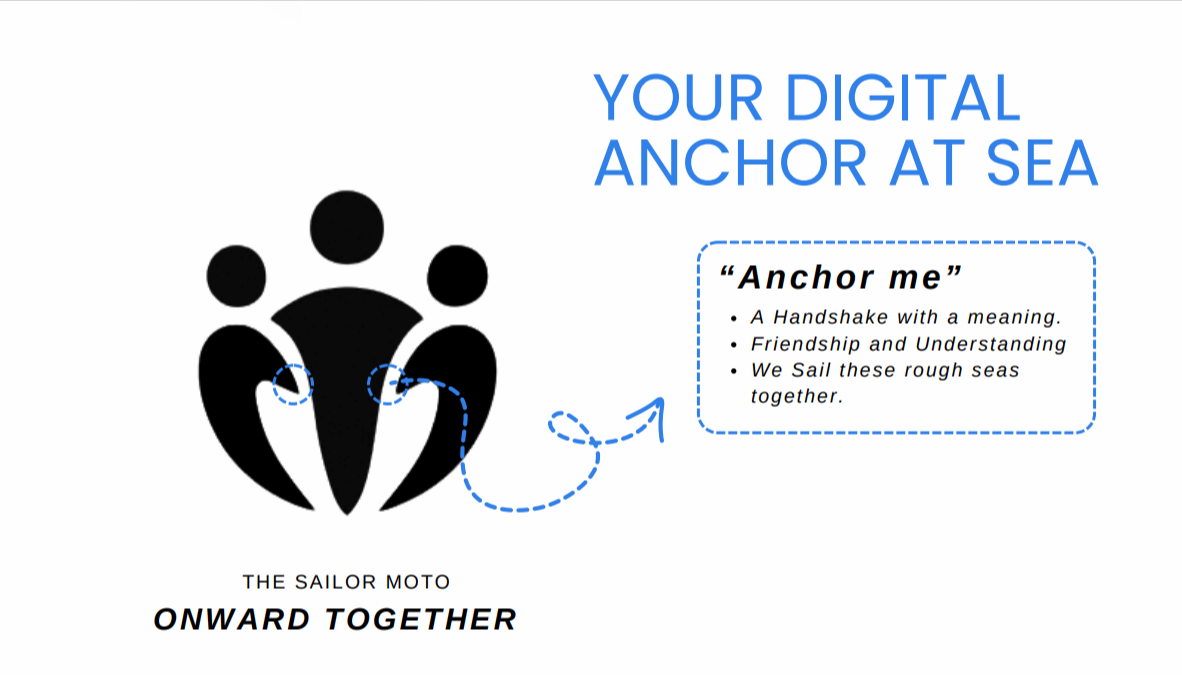
My thought process while designing the logo was simple… My vision was to design “Something more than a logo. Lets design a promise to those at sea, reflected in every detail”.
YOUR DIGITAL ANCHOR AT SEA
Design Process
Information gathering and task undertanding
Research and conceptualizing
Ideation and sketching
Design Prototyping
Testing and Validations
Refinement and Finalisation
Solution Roadmap
Prioritize Central Features
Design for offline First
Increase engagement & Stickiness
Simple User Experience
The UI Accessibility
Challenge
Design for scalability & Cognitive load.
Solution
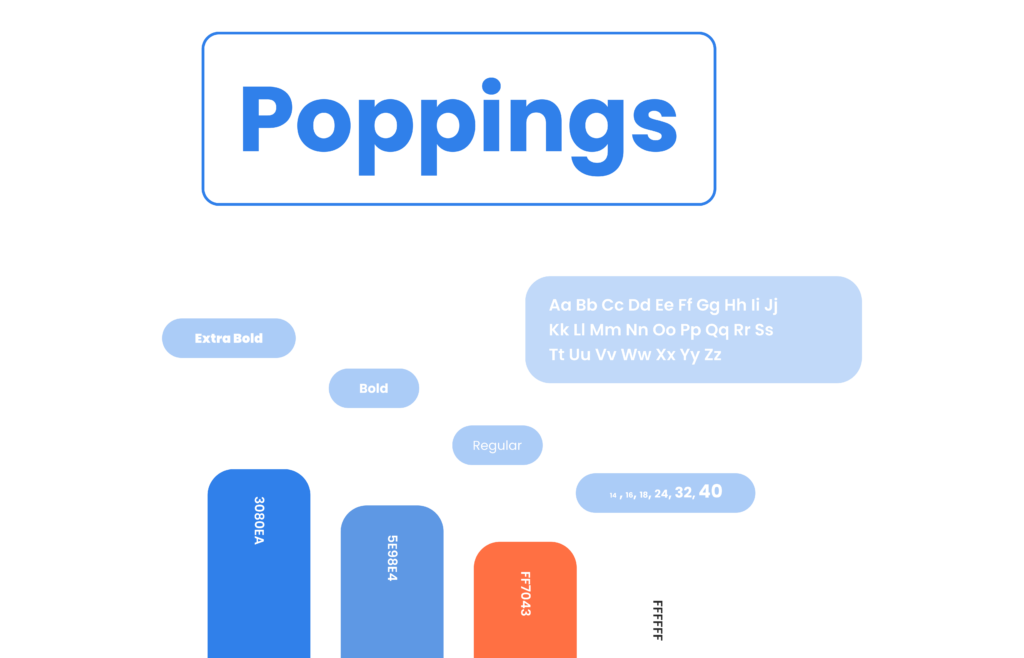
Focus on high contrast colors, generous white space and clear typography
Solving UX
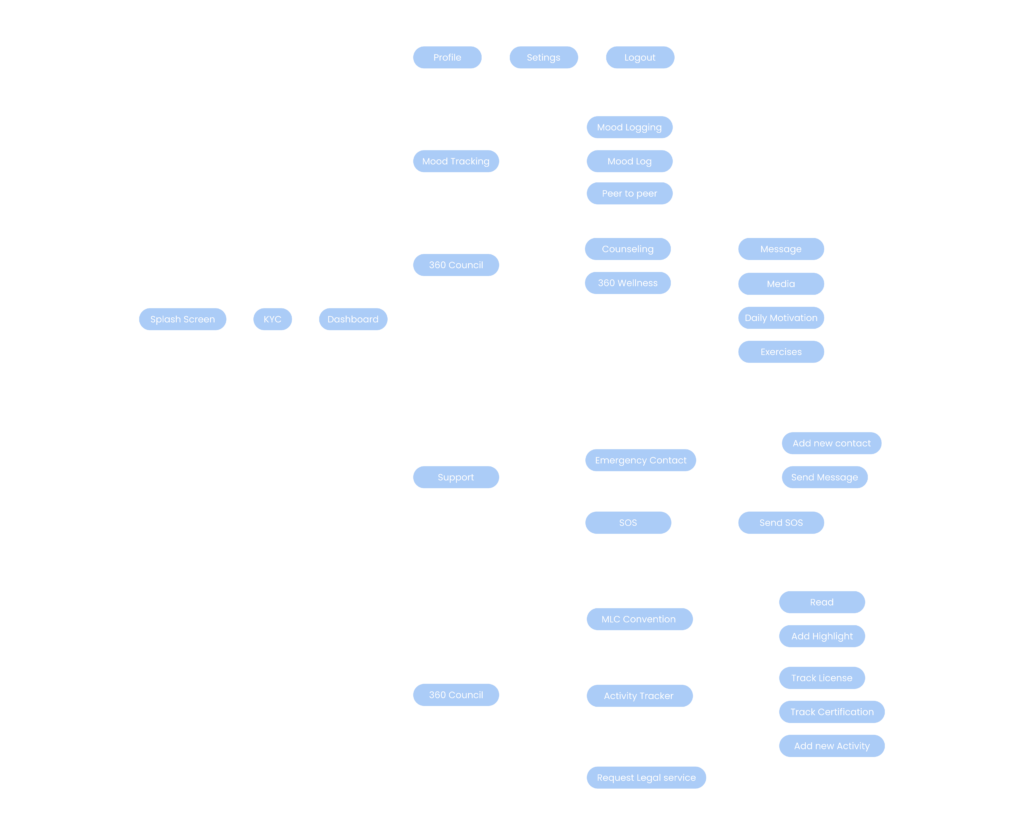
User Flows
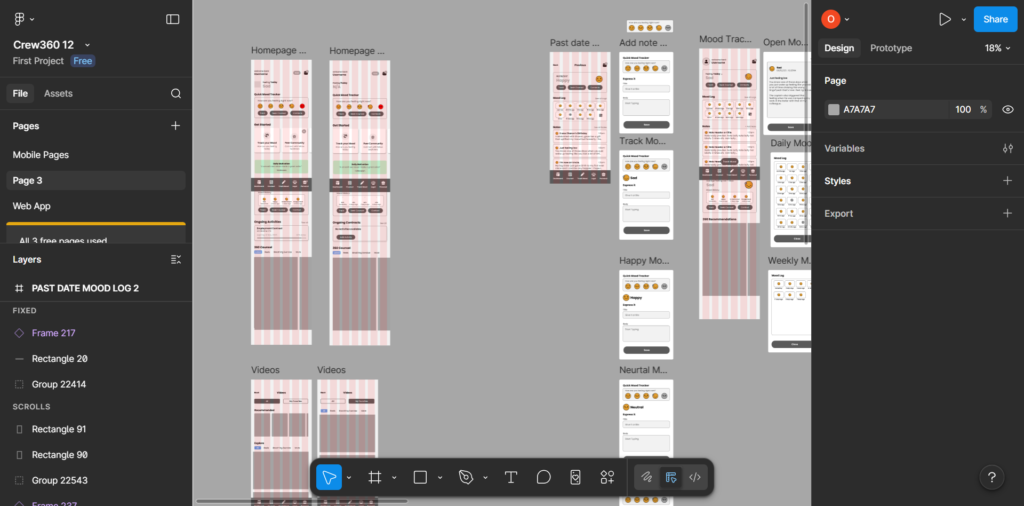
Low Fidelity Wireframes
Key Pillars
Mood Logging
Log mood anytime, track patterns over time, take personalized actions to improve wellbeing
Log up to 24 moods daily.
Express every mood
Avrage feeling metric
Track daily and weekly moods
Track mood in 3 – 5 Secs – Complete
Enter mood details for later.
360 Legal & Activity Tracking
Understand rights under MLC 2006, track contracts, tender legal complaints to relevant authorities
360 Council
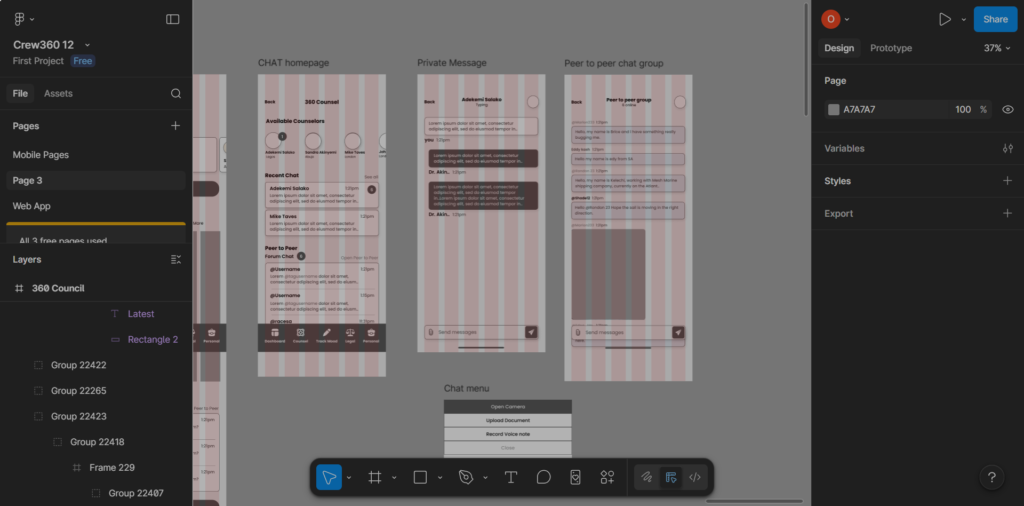
Speak to online certified counsellors, connect with seafarers in the 360 global peer to peer forum, and access other wellness resources.
SOS and Quick Contacts
Send SOS Signals and reach out to family and other quick contacts.
Built for seafarers, designed for life at sea — with multilingual support and an easy-to-use interface, starting from Africa to the world.
Impact and Outcome
A credible, human-centric welfare system tailored to maritime realities
Reduced friction in accessing mental health and support resources at sea
A scalable foundation for expanding into fleet-level welfare insights
Product positioned for adoption by seafarers, welfare organizations, and operators
Built as a long-term support system, not a content or awareness site
Crew360 reflects my approach to leading and building products where human needs, domain constraints, and system design intersect.
WordPress and Design
I built the marketing website to explain the mission, capture waitlist signups, and establish credibility before the app launched.
Clean Waitlist signup website
Clean, mobile-responsive design
SEO-optimized architecture
Mission and problem statement
Design Decisions
All core features work offline
Data syncs when connection returns
No dependency on real-time internet
Encrypted local storage for privacy
This is a system constraint — not a UI preference.
Impact
App Status
Designed, in Development
Website
Live @ Crew360.online
Tools & Tech
WordPress & PHP
Figma
Adobe Suite
Yoast SEO
Read the full thought leadership piece
For a deeper dive into the system-first approach to maritime wellness, offline-first design, and seafarer support systems, read the full article here.