
PHT Cleaning Services
Taking PHT Cleaning to page 1 on Google - and building a system behind it.
Operational Platform · Booking Systems · Digital Systems · Workforce Coordination · SEO-Driven Growth
My Role
DIRECTOR OF TECHNOLOGY
Website design & WordPress development
SEO strategy & execution
Product Design
Admin system oversight (requirements, alignment, monitoring)
Staff app coordination
Technical liaison between business operations and development teams
Ownership of digital visibility and online performance
Digital Direction and Marketing
Overview
PHT Cleaning is a commercial cleaning company in Glasgow. As the company scaled, operational complexity increased. Manual coordination, fragmented booking flows, and low digital visibility limited growth and created unnecessary administrative load.
Problems mean Opportunities
The challenge was not just cleaning services — it was building a digital system that could scale operations, staff coordination, and customer acquisition simultaneously
The Mission
My mission was to build a system-first operation — from SEO and WordPress to admin interface and staff mobile app.
What was built
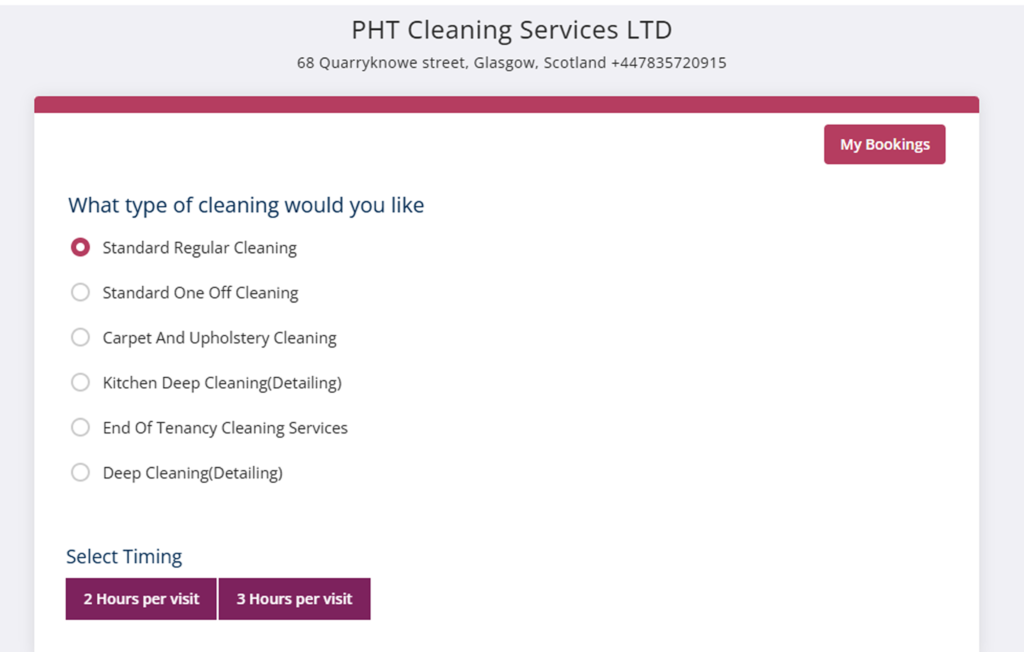
Marketing Website
WordPress-based site designed for clarity, conversion, and search visibility
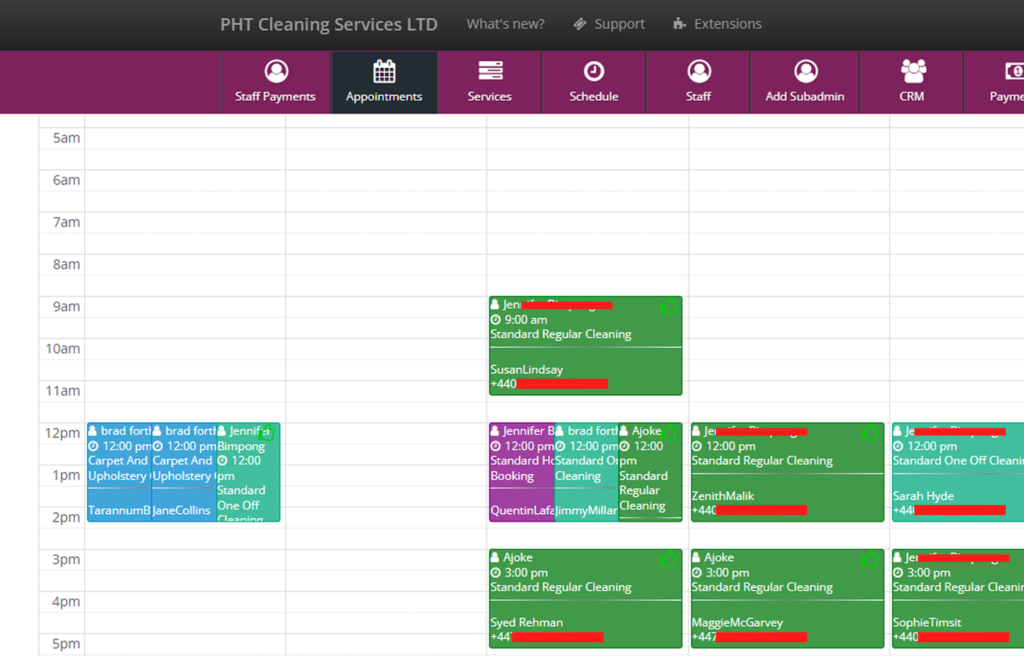
Admin Operations
A central admin interface for managing bookings and operational flow
Customer Booking
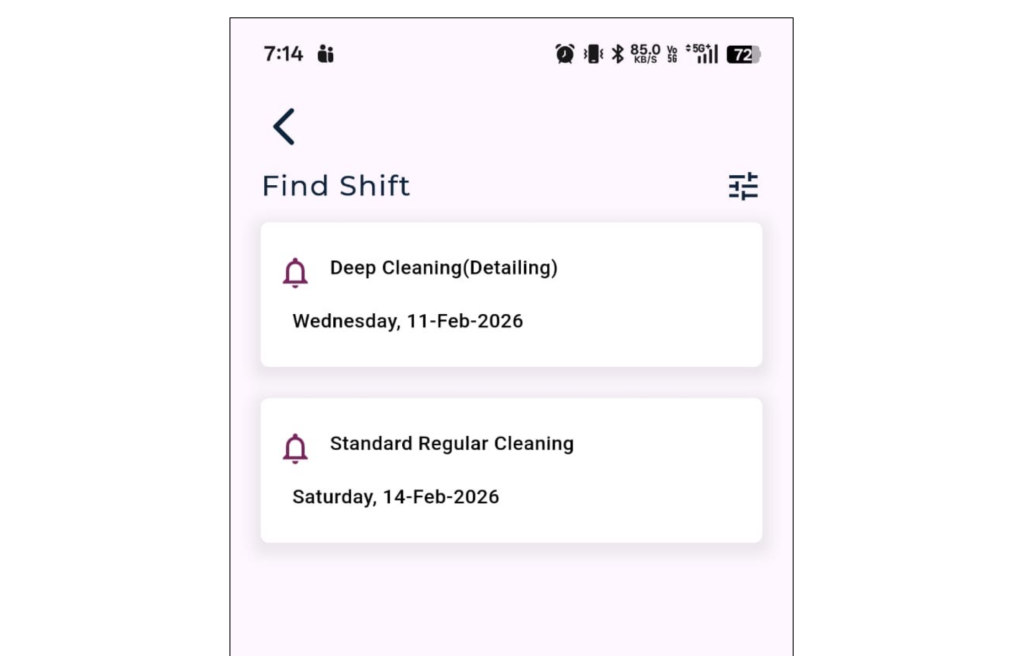
Job discovery, assignment, GPS tracking, and task execution for field staff
Staff Onboarding
a mobile application for staff job discovery, tracking, and execution
The System First Approach
Instead of disconnected tools (website + booking form + manual scheduling + separate staff coordination), we jointly designed a unified pipeline
1.
Demand Entry
Customer books service, captures details upfront
Reduce back-and-forth. Set expectations early.
2
Order Visibility
Job appears in central dashboard, priorities visible
Admin manages flow, not chaos.
3
Workforce Coordination
Staff discovers job, GPS tracked, task completed
Coordination through structure, not constant calls.
A customer's job from start to finish
All systems are designed to work together as a single operational pipeline, not disconnected tools.
Impacts and Outcomes
Streamlined customer booking and job allocation
Reduced operational friction between customers, admin, and staff
Clear visibility across orders and field execution
Strong organic acquisition engine driven by SEO
Digital infrastructure capable of supporting continued expansion
PHT Cleaning demonstrates my role as a Director of Technology — designing, managing, and aligning digital systems to support real-world service operations at scale.
SEO & Visibility Integration
Operations don’t start at booking – they start at discovery. For PHT Cleaning, search visibility was designed as part of the operational system using:
high-intent service pages
SEO-led content architecture
visibility for commercial cleaning queries
SEO Impact & Outcome
Page 1 Google rankings for multiple high-intent service keywords
Consistent organic lead generation through search and pesence
Search visibility positioned as a long-term growth asset
Reduced reliance on paid advertising
*Major Keywords*
| Keyword | Ranking |
|---|---|
|
Cleaning company in Glasgow |
Page 1 |
|
Best Cleaning company in Glasgow |
Page 1 |
|
Hoarding Cleaning Glasgow |
Page 1 |
|
Standard cleaning in Glasgow |
Page 1 |
|
Deep cleaning Glasgow |
Page 1 |
|
Kitchen cleaning Glasgow |
Page 1 |
|
Carpet cleaning in Glasgow |
Page 3 |
GSC Snaphot
“Search visibility became predictable, not sporadic. Organic leads increased significantly without paid ads”.
SEO Snapshots
WordPress and Design
Clean, conversion-focused design
Mobile responsive Website
SEO-optimized architecture
Built for speed and search visibility
Booking
Admin System Leadership
I didn’t build the admin system alone — but as Director of Technology, I:
Defined requirements and scopes
Continuously monitored progress
Ensured alignment with business goals
Connected it to the broader operational flow
Staff Booking App
Business Impacts
Page 1 rankings for multiple industry keywords
Scalable operations — not fragmented tools
Drastically reduced manual coordination
Tools & Tech
WordPress & PHP
Figma
Adobe Suite
Yoast SEO
Google Search Console
Admin interface
Read the full thought leadership piece
For a deeper dive into the system-first approach to service operations, booking, and workforce coordination, read the full article here.